Aktuelles ​​aus dem Institut ​

Hier finden Sie aktuelle Nachrichten aus dem Institut. Schauen Sie auch auf unsere Veranstaltungsseite. Studierende der KAEE finden alle Informationen zur Durchführung ihres Studiums inkl. Fristen und Termine unter Im BA-Studium.

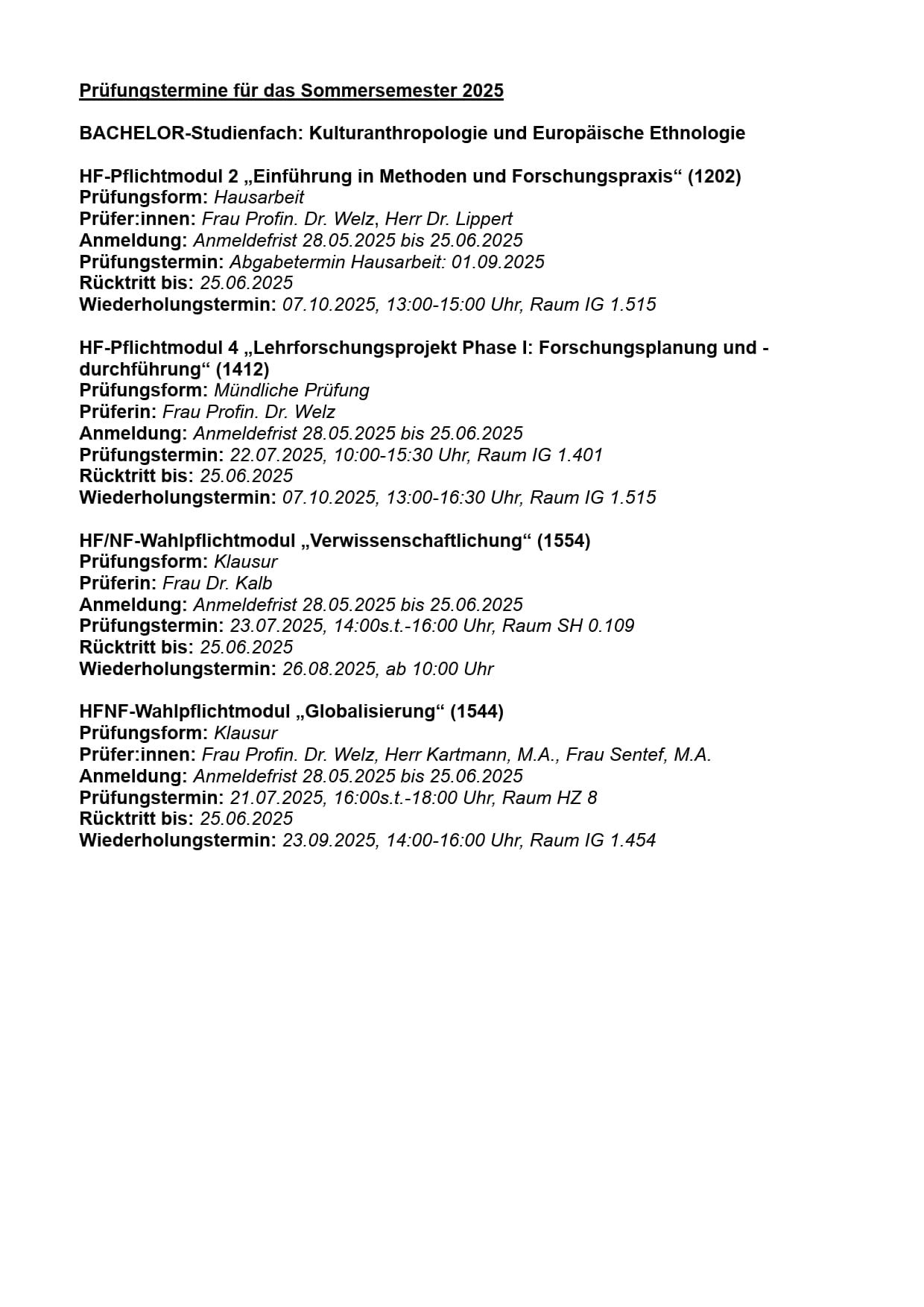
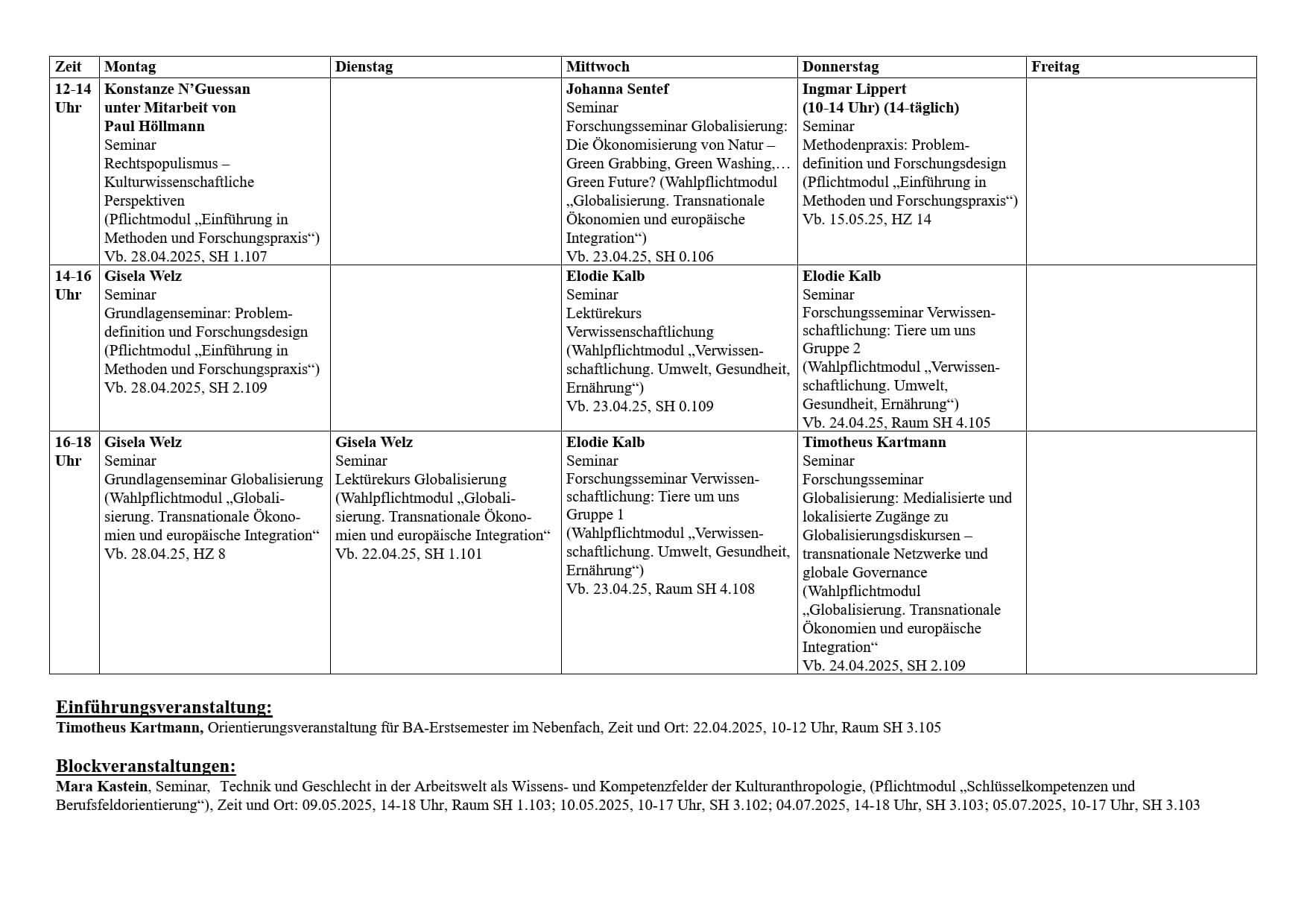
Sommersemester 2025

Jun 10
18:15 Uhr

SH 5.105

Der Vortrag findet auf Englisch statt.
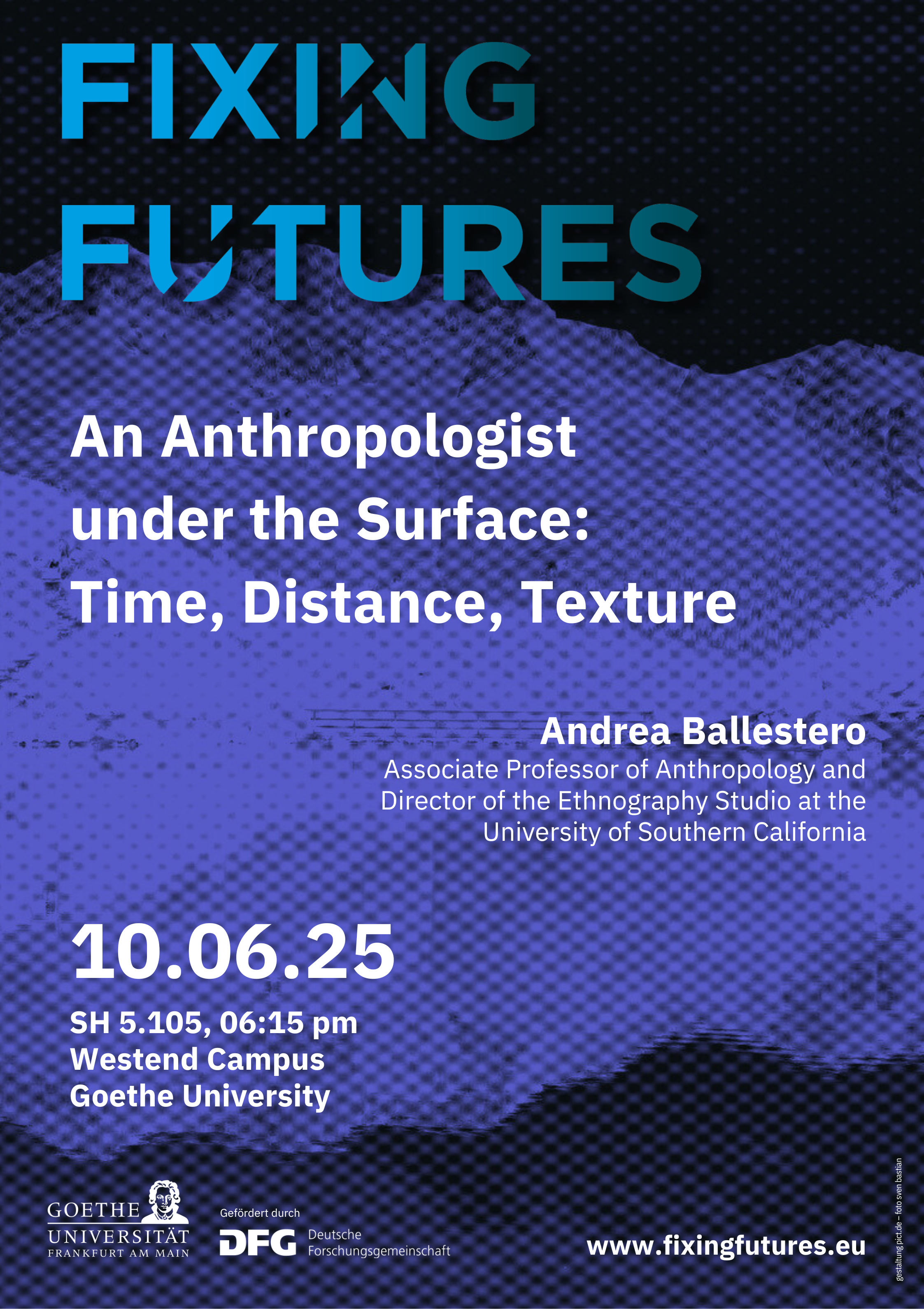
In order to dwell on the aqueous formations we call aquifers, this talk examines some of the attempts people in Costa Rica make to move inwards, towards the center of the Earth. Neither caves nor mines, and more than just water volumes, aquifers pose a challenge for sensing and making sense. Following the lead of scientists and community water organizations in Costa Rica, I consider how they relate to an interior that is not singular, and show three scientific tools they use to do so. Overall, I ask what happens when you look downards and privilege descent as a way of sensing and making sense while living in an already changed political, scientific, and environmental climate. 

Dr. Andrea Ballestero is Associate Professor of Anthropology and Director of the Ethnography Studio at the University of Southern California. Her book  A Future History of Water (Duke 2019) examines how people engage with the world as it is, but differently and do so by creating endless bifurcations. In Costa Rica and Brazil, where the ethnography is located, bifurcations are means to create a difference between water as a human right and water as a commodity as material and political projects. She is co-editor of Experimenting with Ethnography: A Companion to Analysis (2021), a collection of essays and protocols to inspire creative analytic ethnographic work. Currently, Dr. Ballestero is writing a book that explores cultural imaginaries of the underground as a new planetary frontier. In recent publications she has explored aquifers as financial frontiers, practices of touching with light through GIS technologies, physical models as hydro-geo-social choreographies of responsibility, and the concept of casual planetarities. Her scholarship is located at the intersection of feminist STS, legal anthropology, and social studies of finance and has been supported by the National Science Foundation, the Mellon Foundation, the Wenner Gren Foundation, the Social Science Research Council, and the Fulbright program. Her works can be found at https://andreaballestero.com

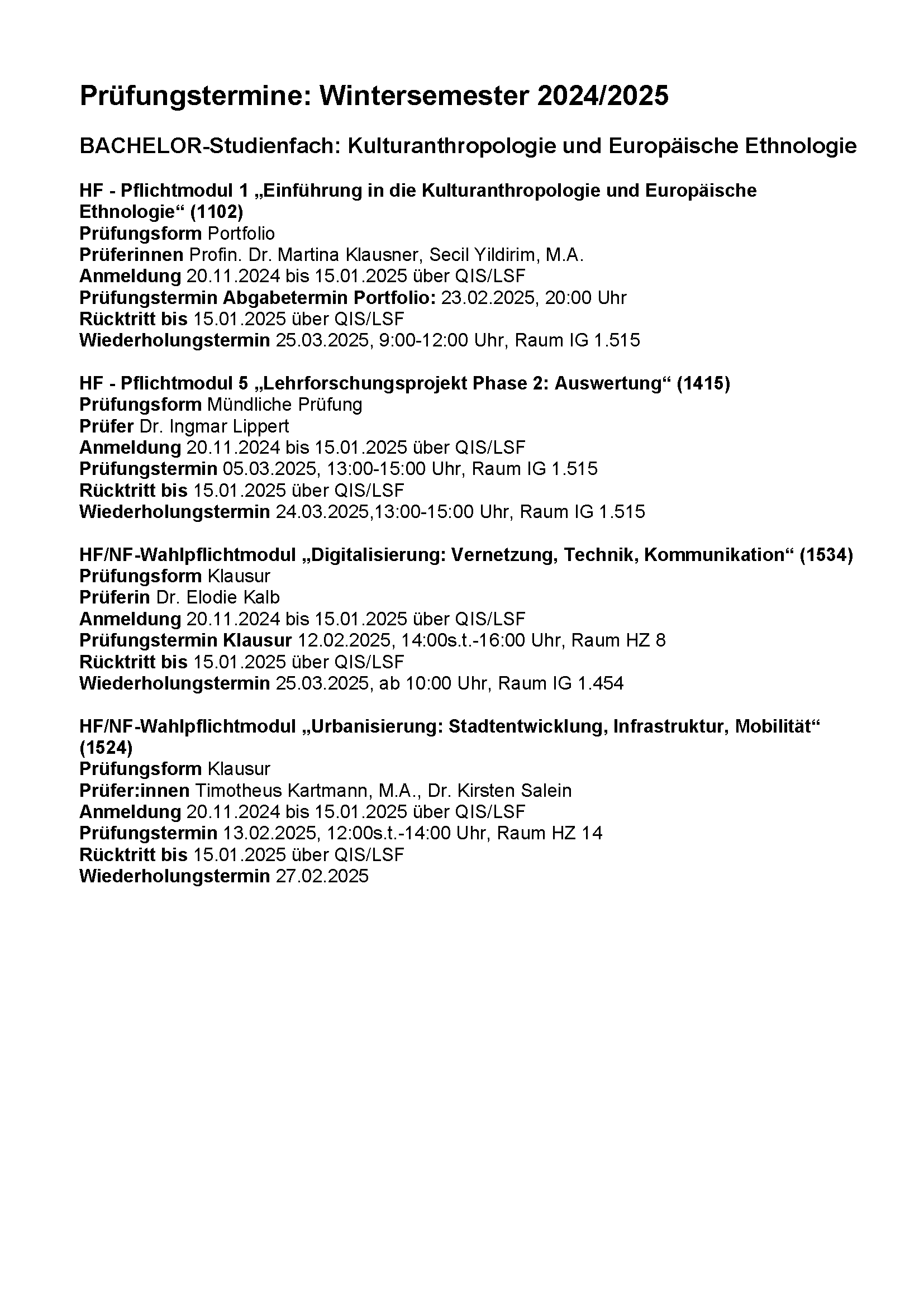
Wintersemester 2024/2025

Das Institut feiert die neue Veröffentlichung von Dr. Ingmar Lippert, welche*r an unserem Institut forscht und lehrt, in Tecnoscienza - Italian Journal of Science & Technology Studies am 6. Februar 2025. Dr. Ingmar Lipperts neueste Veröffentlichung trägt den Titel „Neoliberal Timescapes of Infrastructuring an Environmental Footprint: Configuring Carbon Emissions as Flexibly Substitutable Placeholders“.


Titel: Neoliberal Timescapes of Infrastructuring an Environmental Footprint: Configuring Carbon Emissions as Flexibly Substitutable Placeholders

Journal: Tecnoscienza – Italian Journal of Science & Technology Studies, 15(2)

DOI:  https://doi.org/10.6092/issn.2038-3460/19034

Abstract: Environmental discourses shift over time. Corporations are interested in maintaining efficient systems that translate their operation's environmental impacts into specific environmental discourses, such as carbon. For this purpose, corporate environmental management systems employ accounting. In accounting apparatuses material environmental relations are represented digitally. I attend to maintainers of such digital infrastructures and analyse how they enact the corporation's environmental relations as sufficiently stable. I show that achieving such stability over time is indeed a critical project because the socio-technical relations of the infrastructure routinely threaten such stability. To devise a time-sensitive infrastructural analysis, this problematisation adopts Barbara Adam's timescapes perspective and Lucy Suchman's concept of configuration. Annelise Riles' notion of the placeholder supports theorising the specific political quality of the infrastructural relations. I draw on ethnographic research into corporate carbon accounting in a transnational company. The empirical material consists of an ethnographic story composed of key artefacts of the accounting infrastructure and participant observation of situated engagements with these artefacts by the environmental managers; specifically, I address situations in which participants enact too swift emission reduction, the synchronisation of emissions and the versioning of environments. This story powers detailing how time is imagined and inscribed in critical infrastructural relations. Across these analyses, I problematise how the managers of these corporate carbon emissions continuously (re)configure the latter into an appropriately flexible environmental reality. In sum, I argue that complex temporal politics are at work within maintaining emissions in the corporation to produce tailored versions of environmental realities, effecting a neoliberal timescape.